

10 Women Scientists Who Changed the World
Every year, International Women’s Day falls on the 8th March, and this year, it happens to overlap with British Science Week. What better way to celebrate than to shine a spotlight on women who have made history in the fields of science, technology, engineering and maths (STEM). Throughout history, women were not given the same access to education and science careers, and even so, many brilliant women scientists followed their curiosity, asking big questions and shaping our understanding of the world.
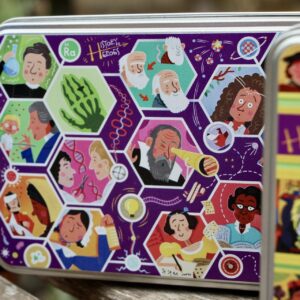
For more learning, check out the History Heroes WOMEN Card Game, History Heroes SCIENTISTS Card Game and the STEM Gift Tin which handily fits two History Heroes card games!
Let’s meet ten incredible women in STEM throughout history.
 Marie Curie

Marie Curie was a physicist and chemist who studied radioactivity, a term she helped to create! Born in Poland, Marie Curie later moved to France to continue her education. She discovered two new elements: polonium (named after her home country of Poland) and radium. Her work helped doctors learn how to use radiation to treat diseases like cancer.
Marie Curie was the first woman to win a Nobel Prize. Even more amazing, she is the only person to win Nobel Prizes in two different sciences: Physics and Chemistry. During World War I, she also helped develop mobile X-ray units to treat injured soldiers. Marie Curie’s contribution to science has had a lasting impact on the world today.
But Marie Curie didn’t just change science herself; she also worked closely with her daughter, Irène Joliot Curie, and together they made history. Irène Joliot Curie studied physics and mathematics and eventually began working alongside Marie at the Radium Institute (now called the Curie Institute) in Paris. Marie Curie became the first person in history to have a child who also won a Nobel Prize in science. In fact, the Curie family is one of the most famous scientific families ever, with multiple Nobel Prizes between them. How impressive is that?!
Learn more with History Heroes SCIENTISTS Card Game.
Rosalind Franklin
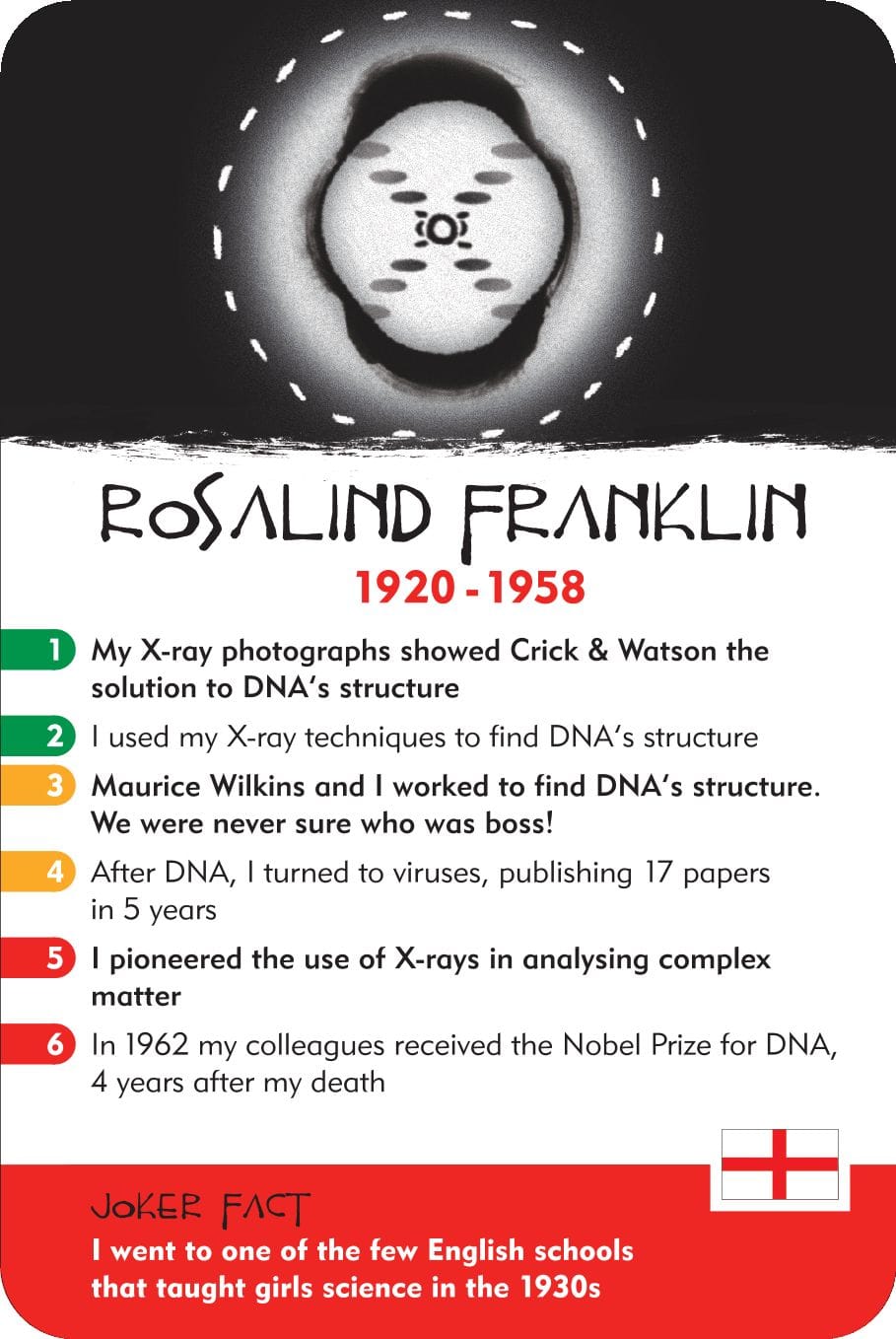
Rosalind Franklin was a British chemist whose work helped uncover the structure of DNA. Rosalind Franklin used a technique called X-ray diffraction to take detailed images of DNA. One famous image, known as “Photo 51,” provided key evidence that DNA has a double helix (twisted ladder) shape. After her work on DNA, Rosalind Franklin turned her attention to viruses, publishing 17 papers in 5 years.
Although her contribution was not fully recognised during her lifetime, scientists today understand how important her work was in revealing how our genes are built. Rightly so, Rosalind Franklin has a home in the History Heroes SCIENTISTS Card Game!
 Ada Lovelace
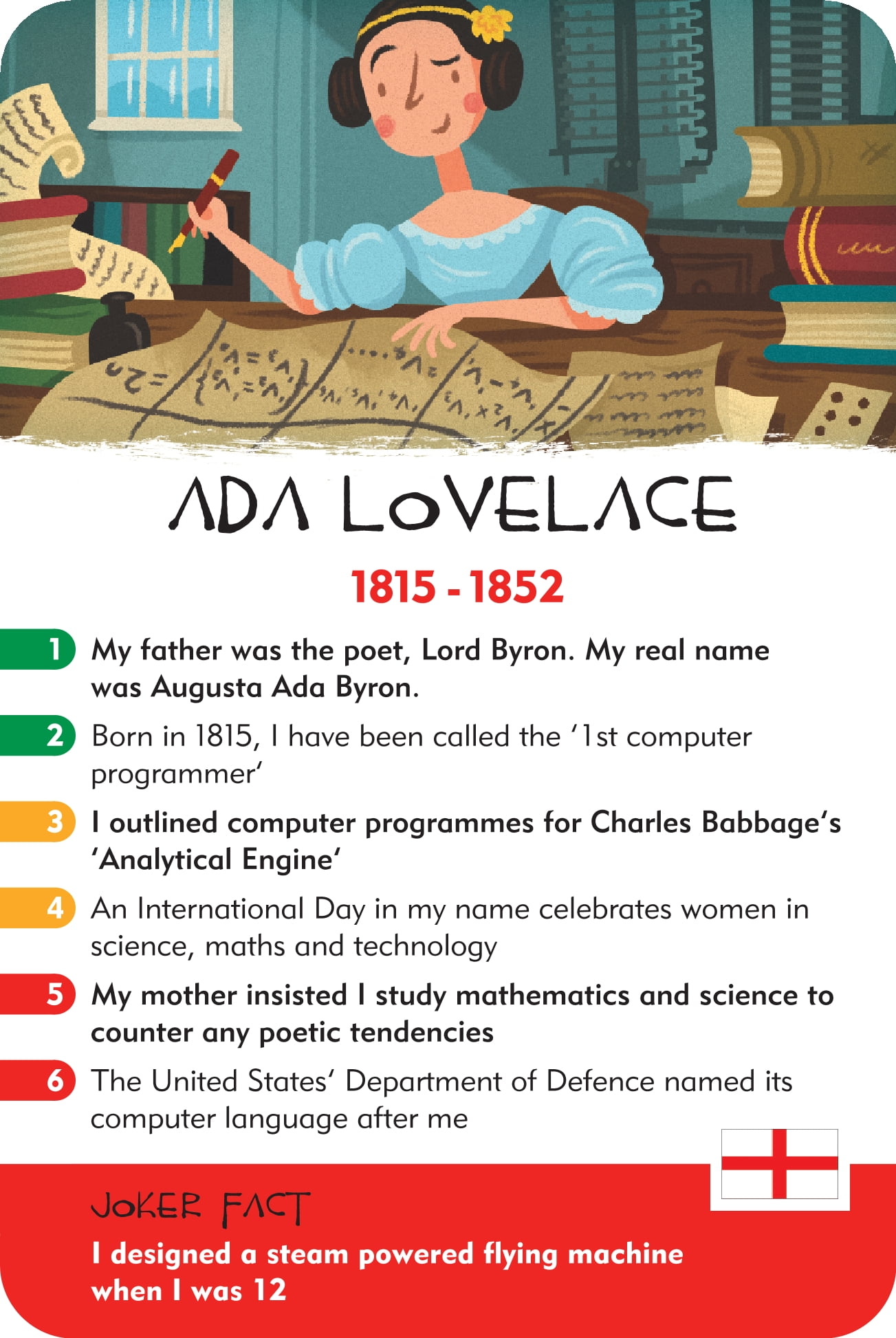
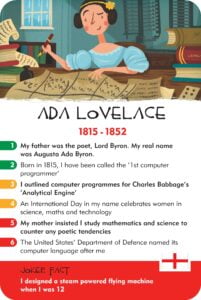
Ada Lovelace was a mathematician who lived in the 1800s, long before modern computers existed. When she was only 12 years old, Ada Lovelace designed a steam powered flying machine! She later worked with inventor Charles Babbage, who designed a machine called the Analytical Engine.
Ada realised that the Analytical Engine could do more than just calculate numbers. She wrote what is now considered the first computer algorithm, or a set of instructions for a machine to follow. Because of this, Ada Lovelace is often called the world’s first computer programmer. How cool! Ada Lovelace’s ideas were far ahead of her time and helped shape the future of computing.
Learn more with History Heroes WOMEN Card Game.
Barbara McClintock
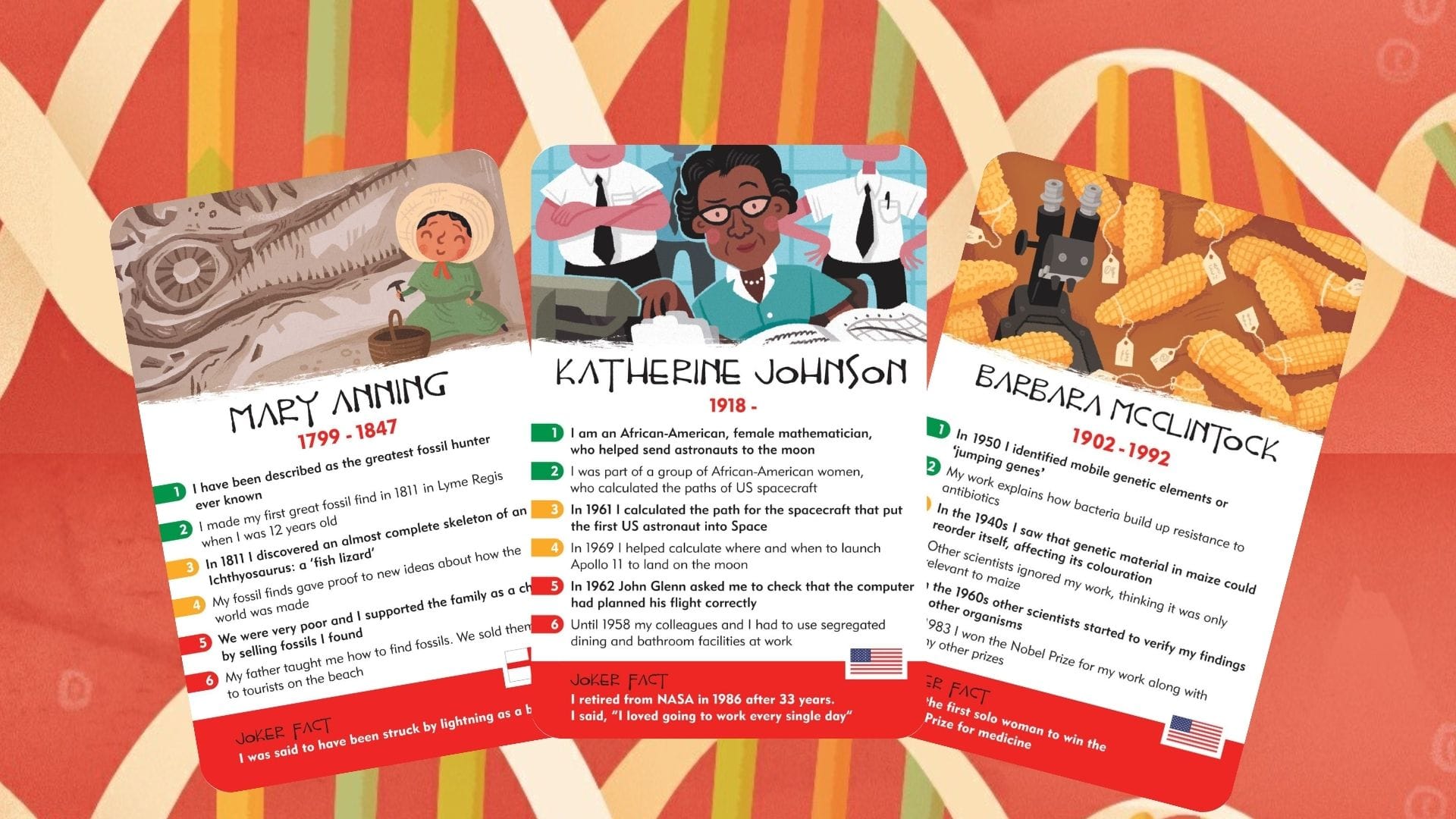
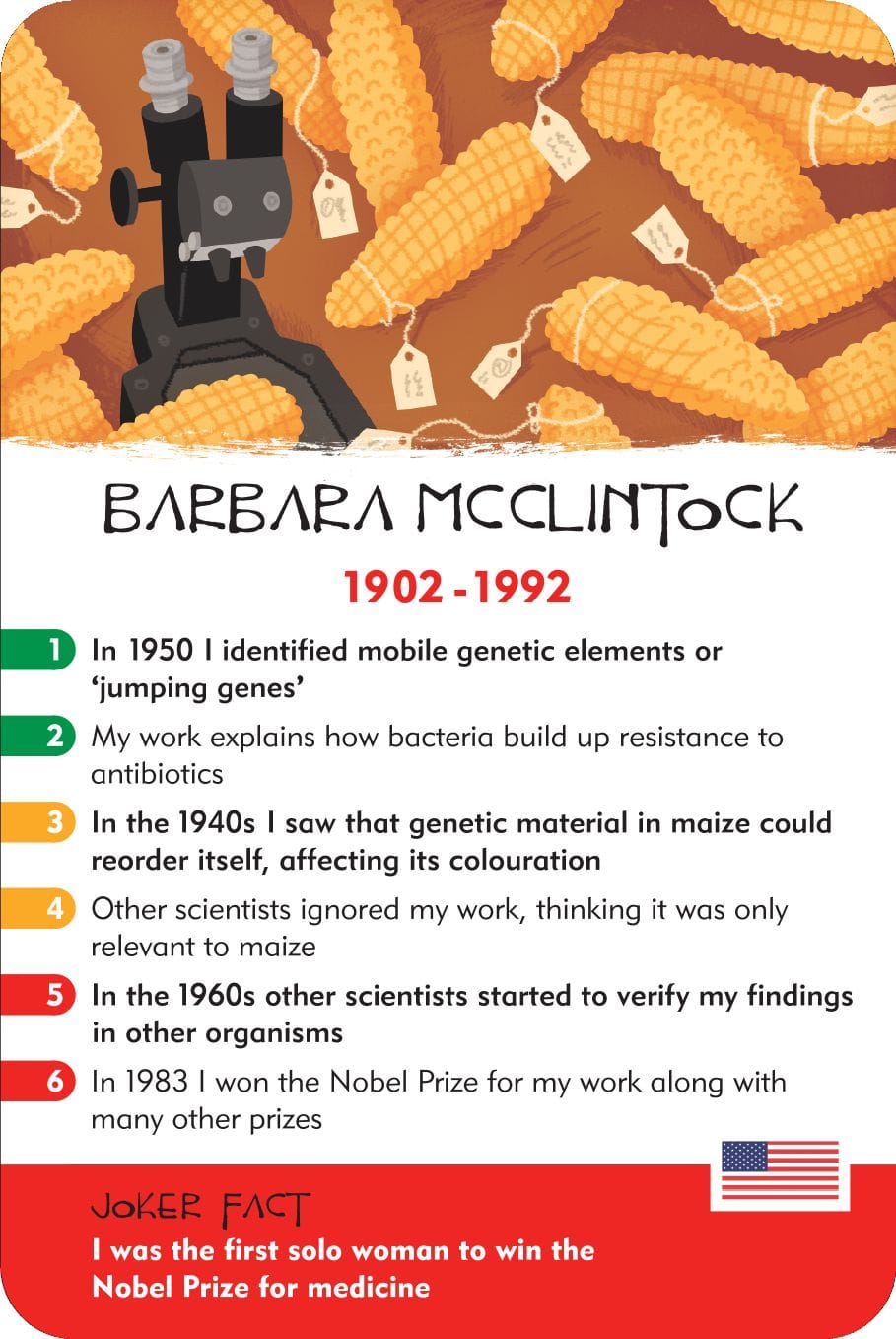
Barbara McClintock was an American scientist who studied genetics by looking at maize (corn) plants. She discovered that genes can move around within chromosomes, which is something we now call “jumping genes”. At first, many scientists did not believe her discovery or its relevance to anything aside from corn. Years later, Barbara McClintock’s work was proven correct, and it became clear how important it was for understanding genetics in humans. In 1983, Barbara McClintock won the Nobel Prize in Physiology or Medicine for her discovery, becoming the first solo woman to win the Nobel Prize for medicine.
Learn more with History Heroes SCIENTISTS Card Game.
Katherine Johnson
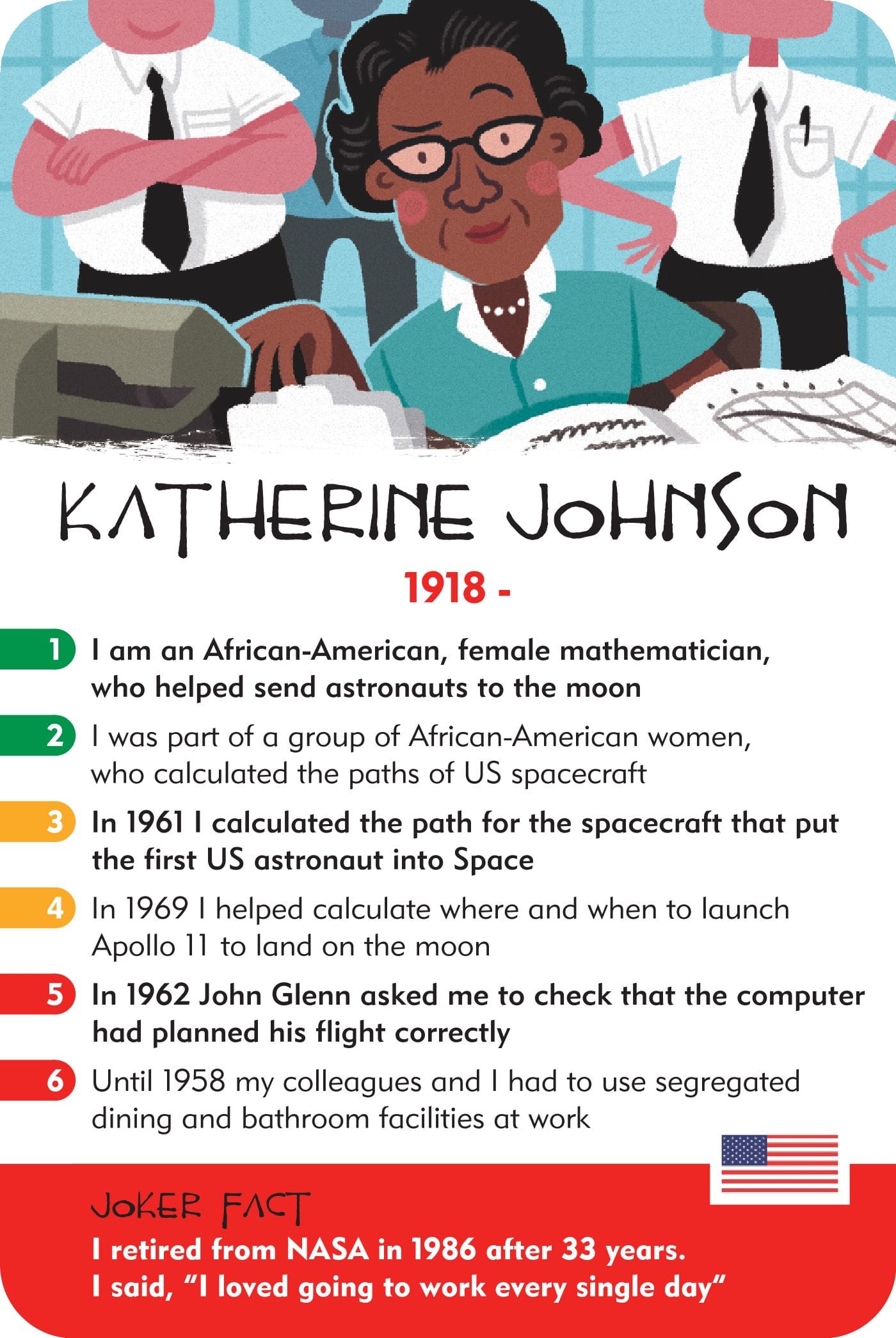
Katherine Johnson was a brilliant American mathematician who worked for NASA, calculating flight paths for early space missions. Famously, this includes the 1961 flight of astronaut Alan Shepard, who was the first American astronaut in space. Katherine Johnson also helped calculate the trajectory for the 1969 Apollo 11 mission, which landed the first humans on the Moon. Her work was so accurate that astronaut John Glenn asked for her to personally check the computer’s calculations before his flight! Katherine Johnson’s story, alongside her colleagues’ Dorothy Vaughan and Mary Jackson, was later depicted in the book and film Hidden Figures.
Learn more with History Heroes’ SPACE Card Game.
Hedy Lamarr
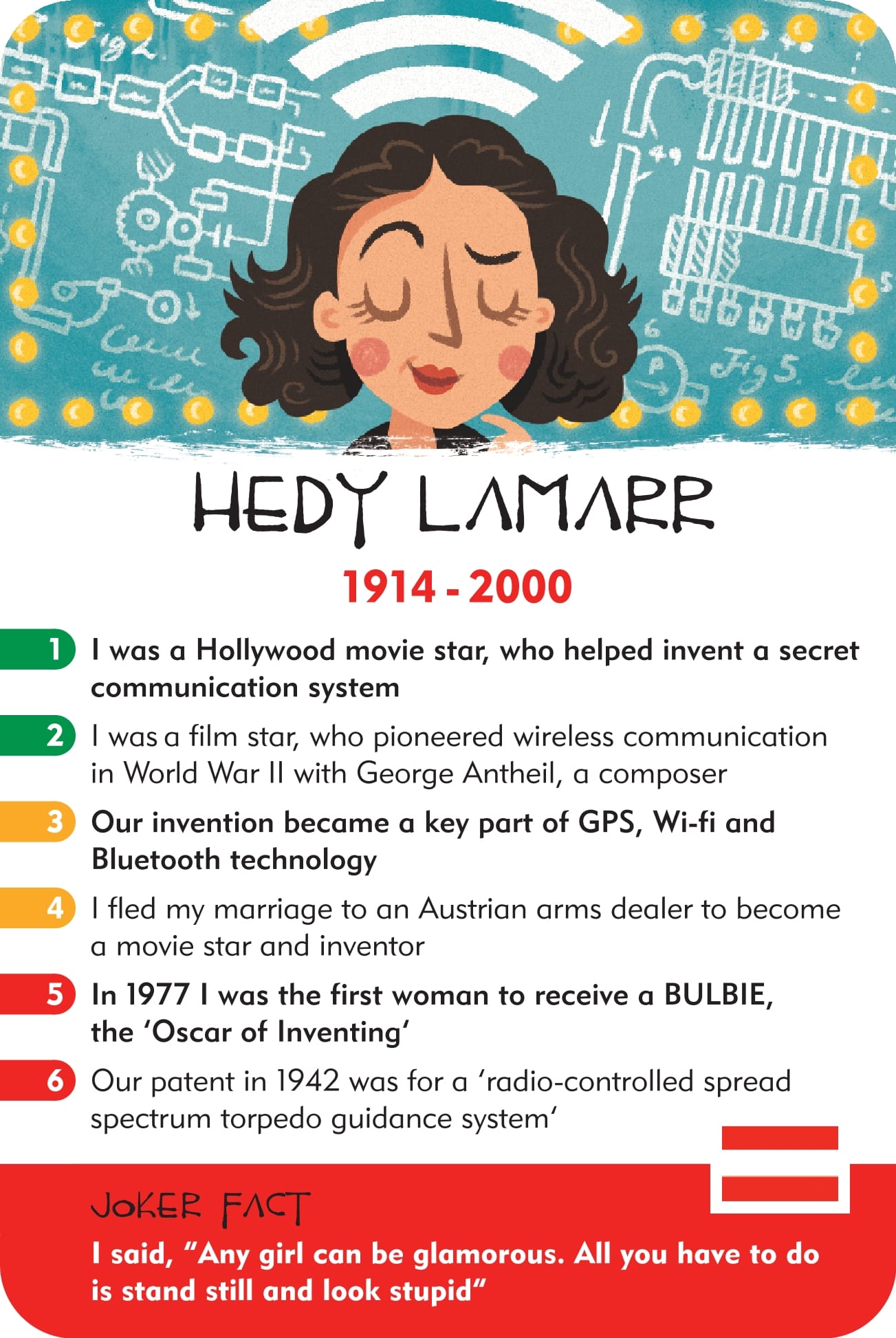
Hedy Lamarr was a famous Hollywood actress, but did you know she was also an inventor?
During World War Two, Hedy Lamarr co-invented a secret communication system with composer Georges Antheil. This technology was designed to prevent radio signals from being jammed. Although it was not widely used at the time, her idea later became important in developing technologies like Wi-Fi, Bluetooth and GPS. Hedy Lamarr showed that creativity and intelligence can shine in many different fields.
Learn more with History Heroes’ WORLD WAR TWO Card Game.
 Mary Anning
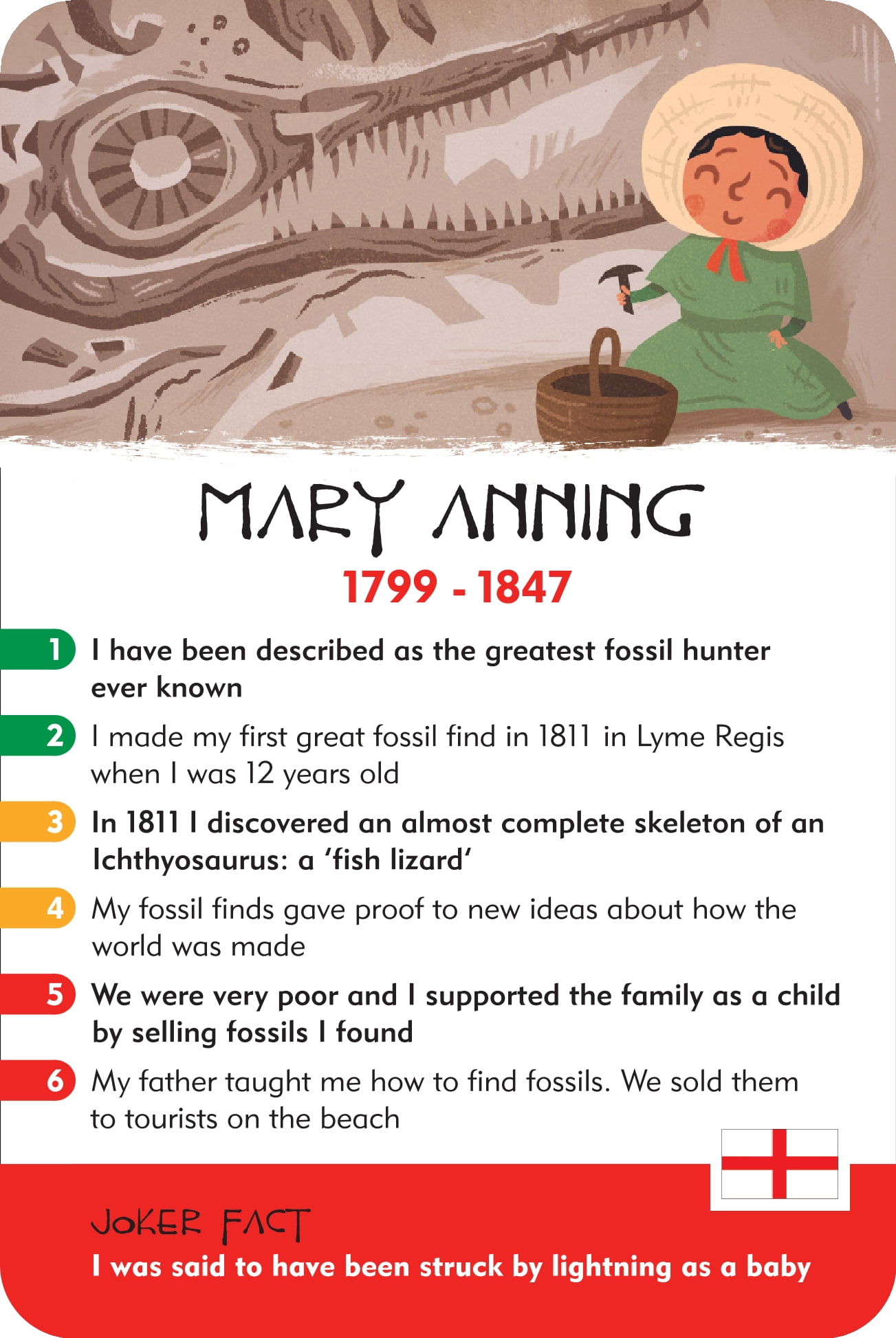
Mary Anning grew up near the cliffs of Lyme Regis in England, collecting fossils along the shoreline throughout her childhood. Mary Anning made some of the most important fossil discoveries of the 1800s, including the first correctly identified ichthyosaur skeleton! Her finds helped scientists understand prehistoric life and the history of Earth, though she faced discrimination during her lifetime for being a women scientist. Today, Mary Anning is rightly celebrated as a pioneer of palaeontology.
Learn more with History Heroes WOMEN Card Game.
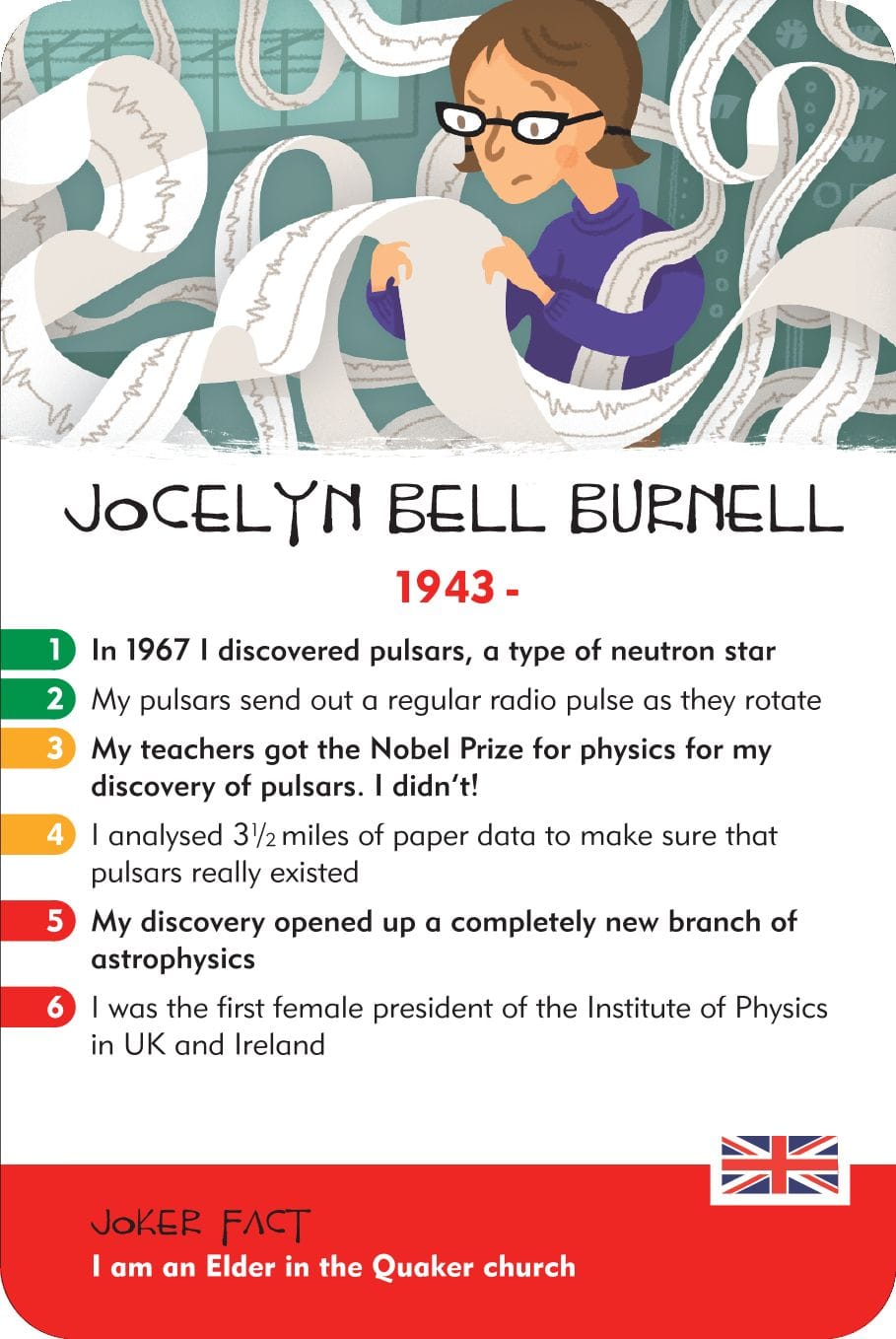
Jocelyn Bell Burnell
Jocelyn Bell Burnell was the first female president of the Institute of Physics in the UK and Ireland. She is an astrophysicist who discovered pulsars, a type of neutron star, in 1967. Jocelyn Bell Burnell analysed 3 and a half miles of paper data to make sure her discovery was correct! The discovery was hugely important for astronomy, but Jocelyn Bell Burnell did not get the credit at the time. Instead, her teachers received the Nobel Prize for the discovery.
Learn more with History Heroes SCIENTISTS Card Game.
 Grace Hopper

Grace Hopper was a computer scientist and a Rear Admiral in the United States Navy. She helped develop one of the first computer programming languages that used words instead of only numbers. This made programming more accessible and easier to understand, which was something she consciously worked hard to achieve. Grace Hopper also helped popularise the term “debugging” after a moth was found inside a computer causing problems… the first computer bug!
Learn more with History Heroes SCIENTISTS Card Game.
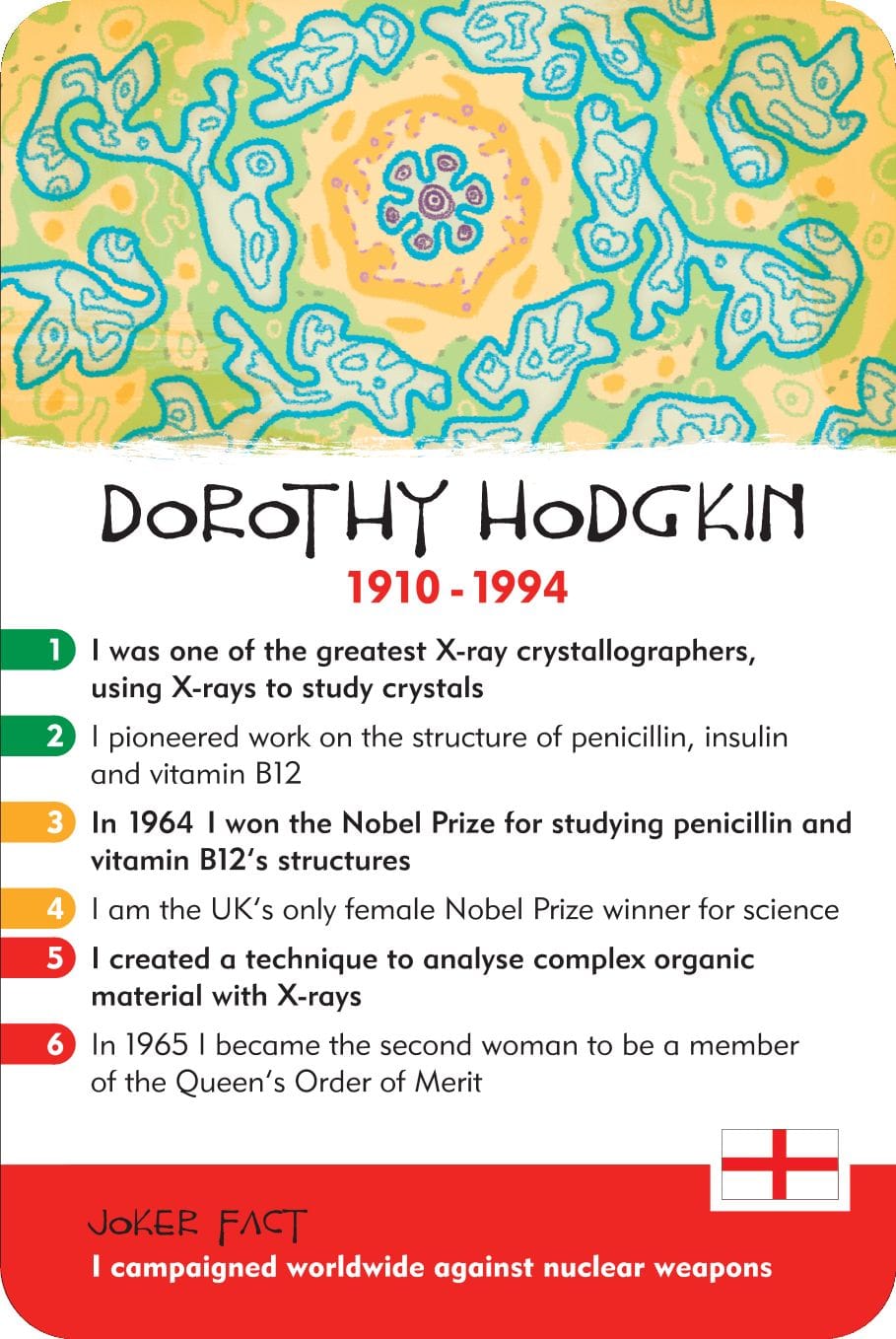
Dorothy Hodgkin
Dorothy Hodgkin was a British chemist who used X-ray crystallography to work out the structures of important molecules. She determined the structures of penicillin and vitamin B12, and later helped uncover the structure of insulin. In 1964, Dorothy Hodgkin won the Nobel Prize in Chemistry for her work. She remains the first and only British woman to receive a Nobel Prize for science!
Learn more with History Heroes SCIENTISTS Card Game.
Want to read more on women and science? Explore our related blog posts below!
Who are the Most Important Scientists in History?
Who was the First Computer Programmer? Ada Lovelace and Her Legacy
British Science Week: 5 British Scientists Who Made History