

How Did Buckingham Palace Become a Royal Residence?
Buckingham Palace has been the official London residence of the UK’s Kings and Queens since 1837. It is used for the many official events and receptions held by the reigning British monarch there. We have all watched countless members of the Royal Family at events and ceremonies, waving from Buckingham Palace’s balconies to the crowds below throughout the decades. It has 775 rooms and its State Rooms are open to visitors every summer. It’s hard to imagine it hasn’t always been one of the most important Royal residences. The fantastic Sarah Ciacci, Professional Blue Badge Tourist Guide, Winner of the Best Tower of London Accredited Lecturer of the Arts Society and Professional City of London Guide, and Director of Tours For My Kids has written us a fascinating account of how Buckingham Palace…became Buckingham Palace. Enjoy reading it!
Before Buckingham Palace was…Buckingham Palace!
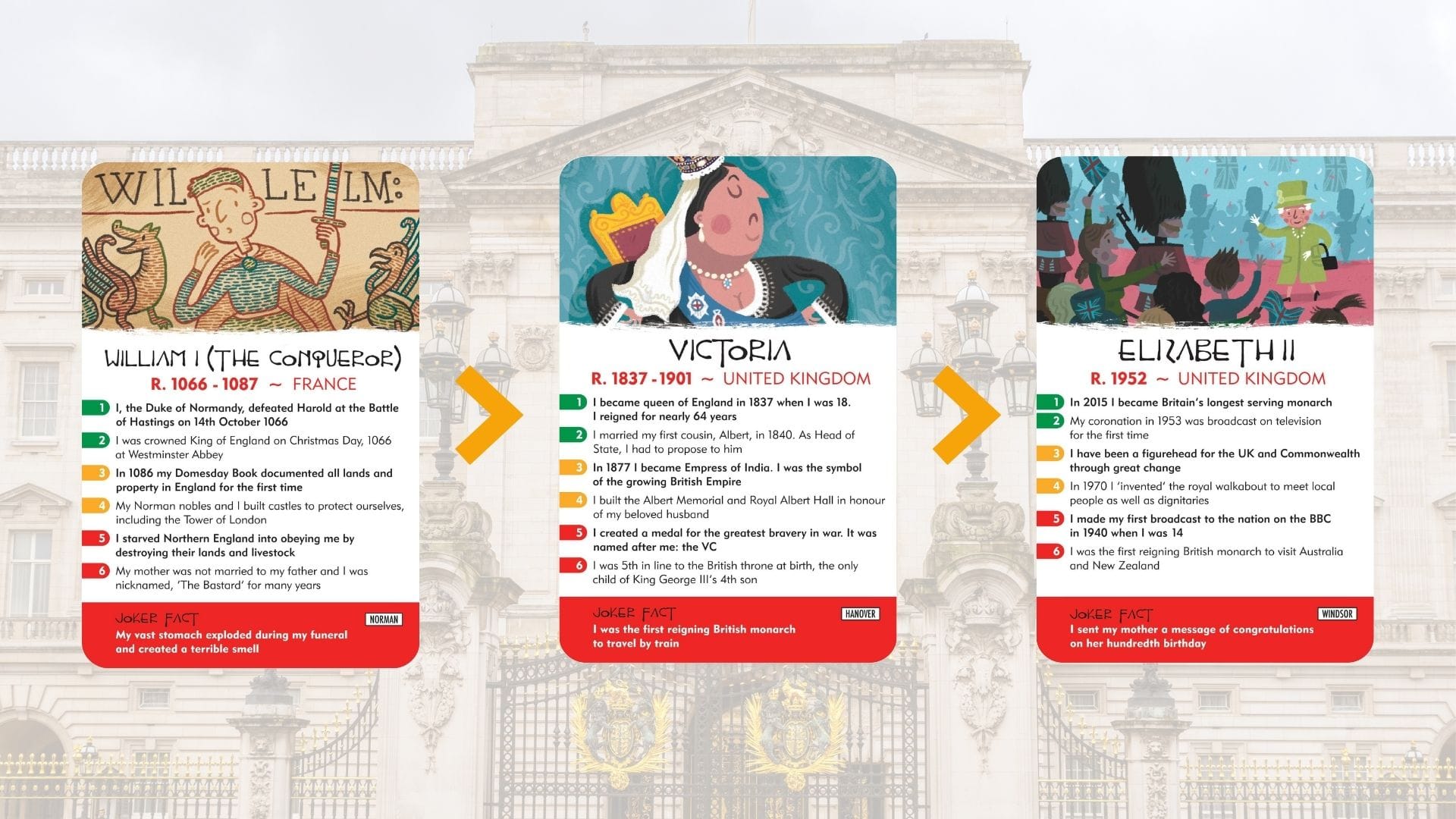
William the Conqueror, Henry VIII, James I
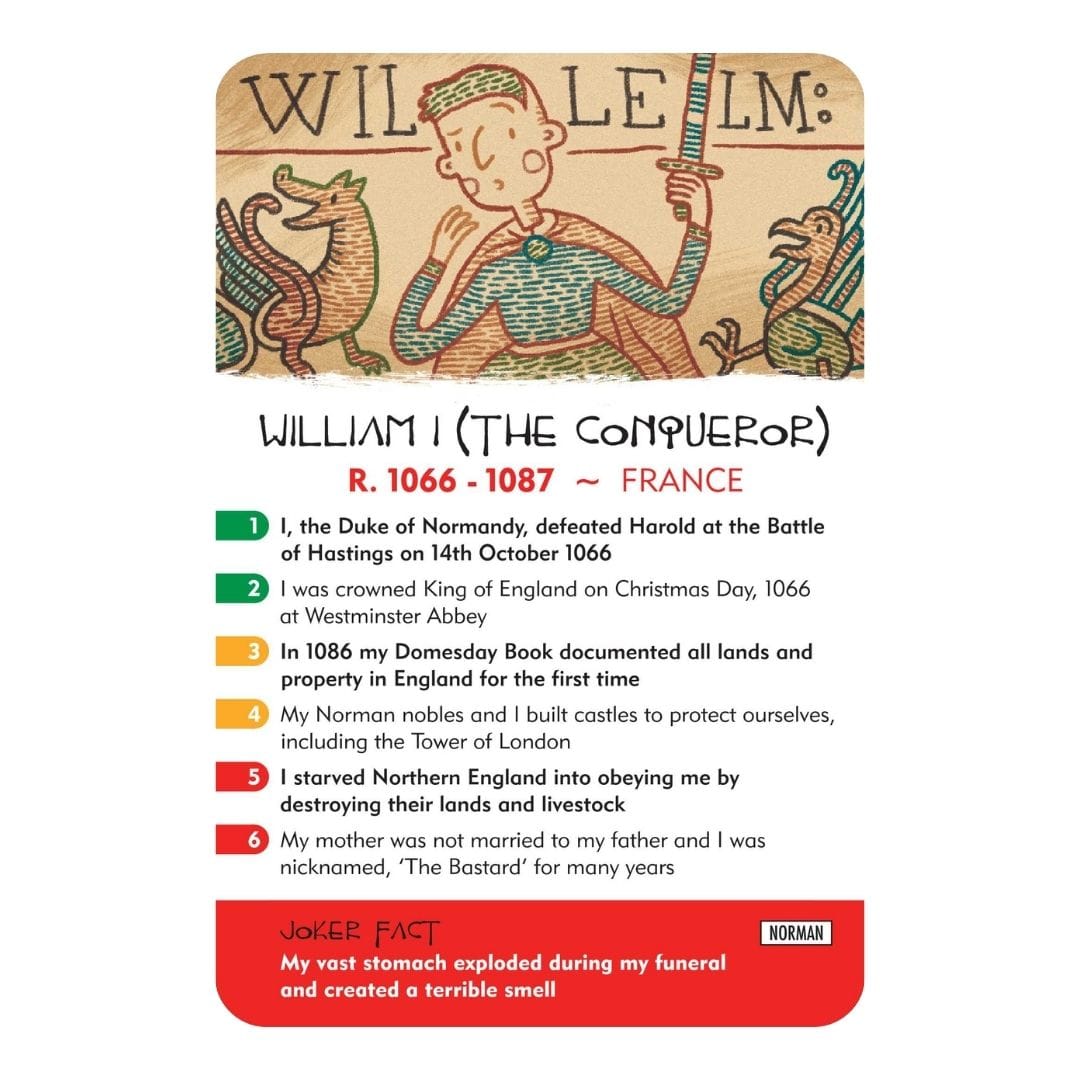 Buckingham Palace’s origins begin nearly a thousand years ago when William the Conqueror invaded England in 1066. One of his Norman landowners acquired the land Buckingham Palace is built on and gave it to Westminster Abbey, the nearby Coronation Church. On the land, Westminster Abbey built a manor house and also a religious hospital, called the Hospital of St James, for people sick with leprosy. Some 500 years later the lands were bought by the Tudor King Henry VIII (the one who had the 6 wives and beheaded two of them!). He built the little St James’s Palace (which you can still see today) there and kept the land as a park for hunting, so the area of Buckingham Palace was hunting grounds full of trees and birds and deer.
The next king who took an interest in the site was King James I of England. He became king of England in 1603, but he was already King of Scotland before that. He was interested in lots of things. He wrote about witches and demons (he believed in both), he wrote an anti-smoking pamphlet and he had a new translation of the bible written (called the King James Bible). He was also interested in making silk. Silk was a very expensive fabric and Italy and France were making lots of money producing and selling silk. James I thought England should do the same.
So, he created a mulberry plantation, where Buckingham Palace stands today, as he discovered that silkworms produce silk threads when you feed them mulberry leaves. He planted the trees and fed the silkworms their leaves…and waited. But the silk worms did not produce their silk threads because poor James had ordered black mulberry trees, not the white mulberries that silkworms liked! So King James I’s silkworm project didn’t work out, but it did lead to a huge fashion for mulberry trees in England!
At some point in the 1600s a large house was built on the site of James’ mulberry plantation and in 1698 the house was rebuilt by John Sheffield, later the Duke of Buckingham. That house, which was quite grand, became known as Buckingham House.
How Buckingham House…became Buckingham Palace
George III, George IV, William IV, Victoria 
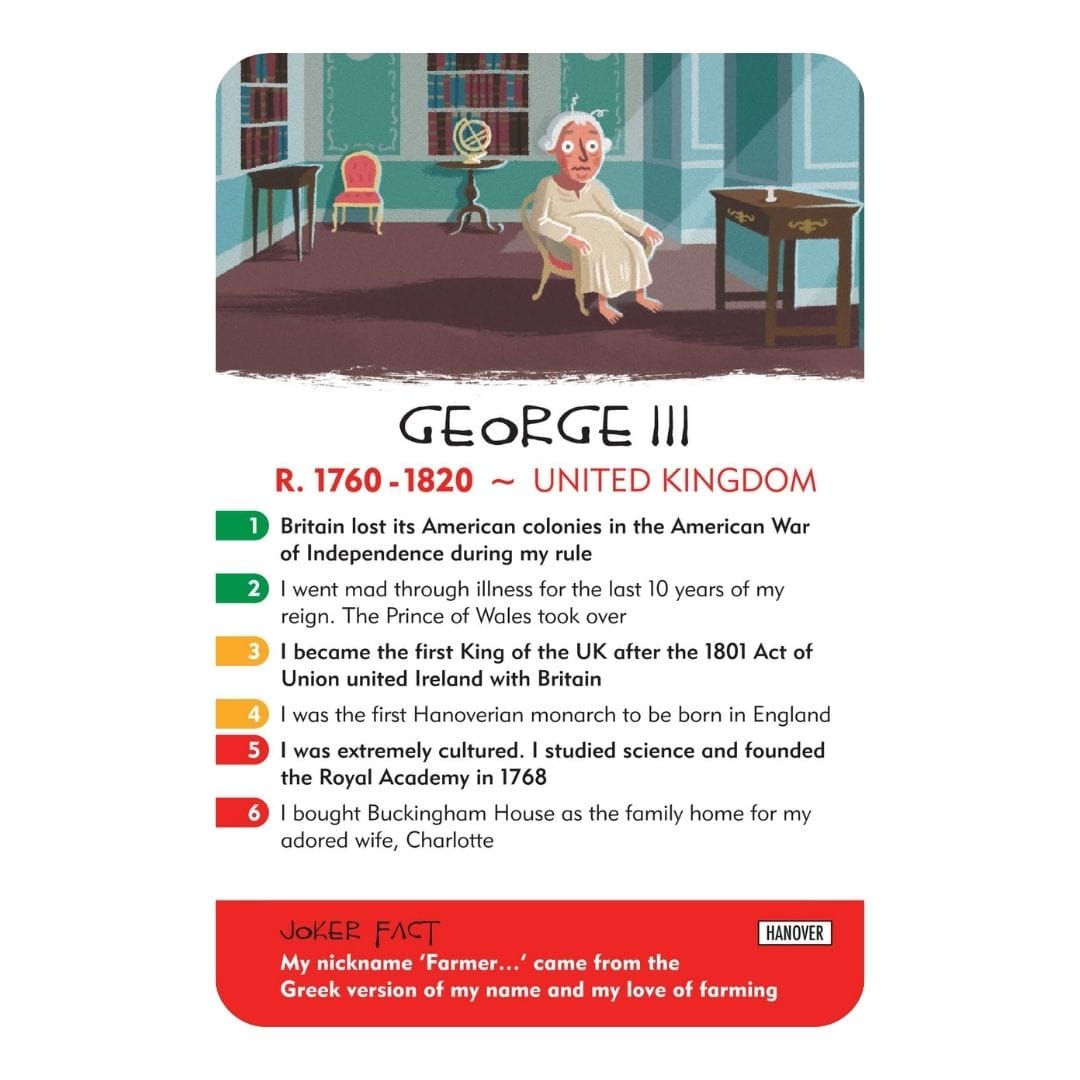
In 1762 George III acquired Buckingham House and used it as a private family home for his wife, Queen Charlotte, and their children. It was known as ‘The Queen’s House’. St James’ Palace remained the court’s official seat. George III’s heir, the flamboyant next king, however, had grander plans for the ‘family home’.
George IV was a pleasure-loving king. He liked eating and drinking, he loved a party and he spent loads of money on his clothes, on art and on his homes. He also had grand plans for Buckingham House. In the 1820s his architect John Nash rebuilt it into the grand Palace we see today (there have of course been some changes over the years!). The cost of the new palace was huge! When George IV died in 1830 the building was almost finished but there was no money left to furnish it. The next king, William IV was happy living at Clarence House and didn’t want to spend lots on finishing Buckingham Palace. He even offered it up to be the new Houses of Parliament when Parliament was burnt down in a fire in 1834 but his offer was declined.
How Queen Victoria made Buckingham Palace the UK Royals’ Principal Residence
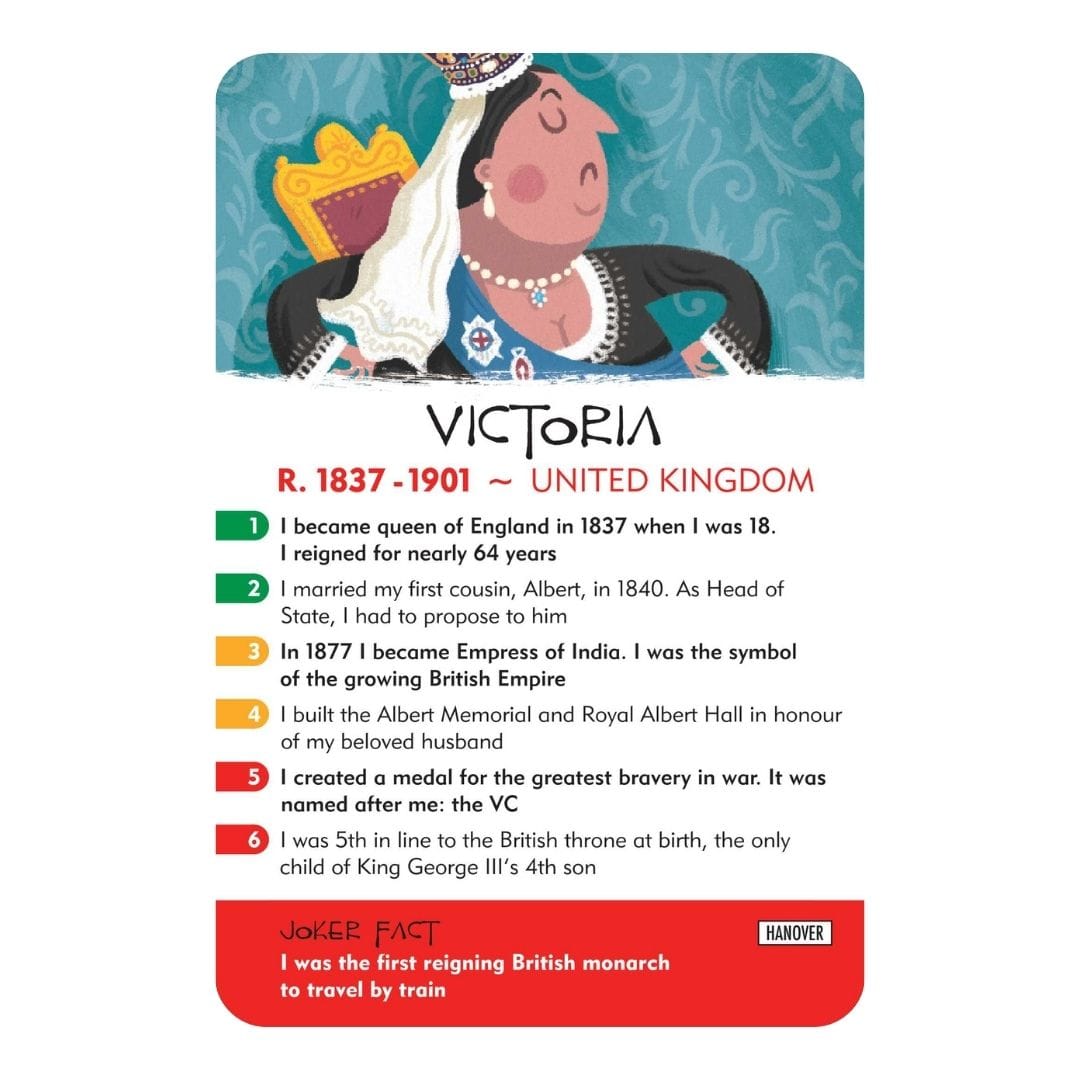 In 1837 Buckingham Palace’s fortunes changed when a young 18-year-old girl sought refuge there. She happened to be the new, young Queen-to-be Victoria and she was determined to escape her stepfather, Sir John Conroy and her mother’s control of her. They had been plotting to rule in Victoria’s place when she became Queen.
Victoria had grown up isolated in the nearby Kensington Palace. Her stepfather Conroy made her follow very strict sets of rules, which were called the Kensington System. She had a timetable of lessons; she was not allowed to be on her own; she wasn’t allowed friends; she couldn’t walk down the stairs unless she was holding someone’s hand, and she had to always sleep in the same room as her mother – until she was 18!
Victoria fell badly ill with typhoid fever in 1835. In her vulnerable state, Conroy sneakily tried to force her into signing a document, handing power over to him when she became Queen, but she refused – a sign of her very strong character. In 1837 her fortunes changed when her uncle, King William IV, died and she was named queen aged only 18.
One of the first things she did was to move the much bigger Buckingham Palace and make it the monarch’s principal London residence. She lived at one end and she gave her mother rooms in the opposite end. She must have felt a great sense of relief to be free, independent and now powerful, as she stood at the window, gazing out over St James’s Park. That was her front garden, the same park that we can walk through today full of birds, ducks and swans. Have you wandered through St James’s Park? It makes for a great day out, and even greater with a History Heroes pack in hand! Check out History Heroes LONDON Card Game.
Even though Queen Victoria was so keen to move into the Palace in 1837, it was still unfinished and unfurnished! The chimneys didn’t work so they couldn’t have fires – the palace was freezing. The bells didn’t ring, the windows didn’t open or close properly, there wasn’t enough running water, and the ventilation was so bad that gas from the gas lamps started building up , risking dangerous gas explosions! Over the years, however, problems were fixed, renovations were made and furniture was installed. Buckingham Palace was also expanded because Queen Victoria and her husband Prince Albert didn’t think that the palace was big enough, so they had the front wing added with a balcony in the centre so that on occasion she and other royals could wave to the crowds outside.
Victoria and Albert loved each other very much and they had a huge family of nine children who all lived in the palace. In 1841 their eldest son and the future King Edward VII was born in Buckingham Palace, and he also died in the palace in 1910. Fun fact: Edward VII is the first (and only) monarch to be born and also die at Buckingham Palace! Learn all about the Kings and Queens who made history in the History Heroes KINGS & QUEENS card game.
How Buckingham Palace developed in the Twentieth Century
 Elizabeth II
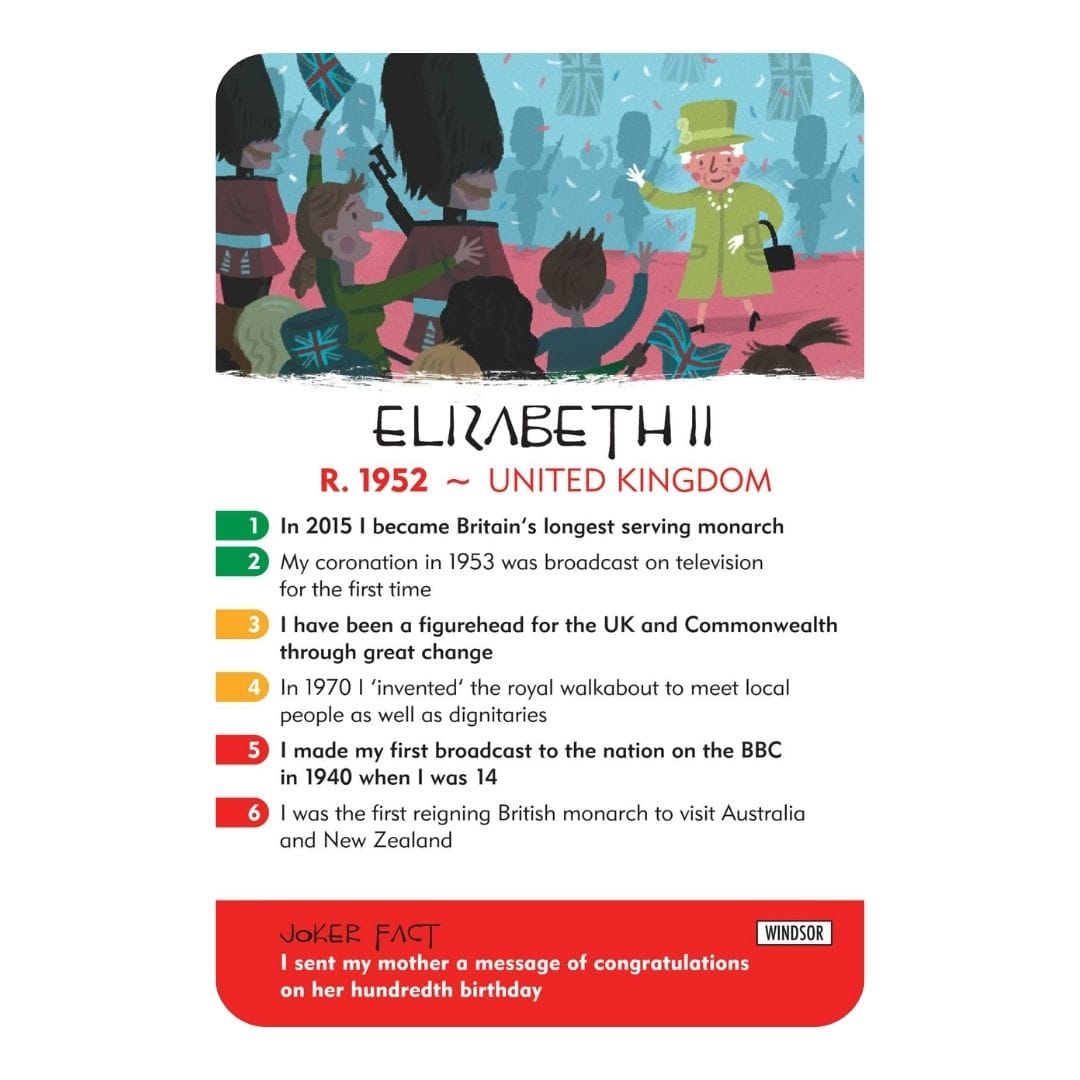
Our next important resident of Buckingham Palace was Queen Elizabeth II, the mother of our current King Charles III and Britain’s longest reigning monarch with 70 years on the throne. Fun fact, Queen Elizabeth II beat her great-great grandmother Queen Victoria’s impressive 63 years reign by 7 years!
Elizabeth II moved into Buckingham Palace aged ten when her father George VI became king in 1936. A few years later disaster struck when in 1939, World War II broke out and Britain found itself fighting Adolf Hitler’s Nazi Germany. In 1940 Hitler sent his air force, the Luftwaffe, to drop bombs over London in what was called the Blitz. It was a very dangerous time in London and lots of the city was destroyed in the bombing.
To keep them safe, children who lived in London were sent to other parts of the country, and even the two princesses Elizabeth and her sister Margaret were sent out of London to Windsor Castle. But their parents, King George VI and Queen Elizabeth decided to stay in Buckingham Palace in London in solidarity with all the Londoners, who had to stay and work in the capital, in particular those in the East End of London where the bombing was very heavy. Even Buckingham Palace was hit by bombs through the war, and, after one of the bombs hit, Queen Elizabeth famously said “I’m glad we have been bombed. Now I can look the East End in the face”.
Eventually on VE day on the 8th May 1945, after 6 long years, World War II was finally declared over and there were massive celebrations in London. 1000s of people walked to Buckingham Palace cheering – Can you imagine the noise when the King, the Queen and princesses Elizabeth and Margaret came out on the balcony and waved at everyone?! Even more amazing was that Princess Elizabeth and Princess Margaret were allowed to secretly join the crowds in celebrating on the streets outside Buckingham Palace after they had appeared on the balcony with their parents. You can learn all about World War II in our classic card game, History Heroes WORLD WAR TWO card game.
Buckingham Palace Today
That balcony where the royal family stood on VE day, has become one of the most important parts of Buckingham Palace. Still today it is where the royals come out to wave at the crowds for important celebrations, like after the Coronation when new kings and queens stand on the balcony wearing the Imperial State Crown. They also come out for birthdays and important memorial days so we can see them and wave, and remember the traditions and the history of royalty and of Britain. After reading this, you will also know some of the wonderful history of Buckingham Palace itself!
Learn more about the monarchs who made their mark on British history, in the History Heroes KINGS & QUEENS card game. Why not grab yourself a limited edition History Heroes KINGS & QUEENS gift tin, and pair it with your second fantastically fun card game such as the History Heroes LONDON card game. The perfect thing to take with you on your days out in London, at home, in the car, or at the beach!
Guest Author – Sarah Ciacci
Professional Blue Badge Tourist Guide, Winner of the Best Tower of London Accredited Lecturer of the Arts Society and Professional City of London Guide, and Director of Tours For My Kids.