


Who Was Ida B. Wells?
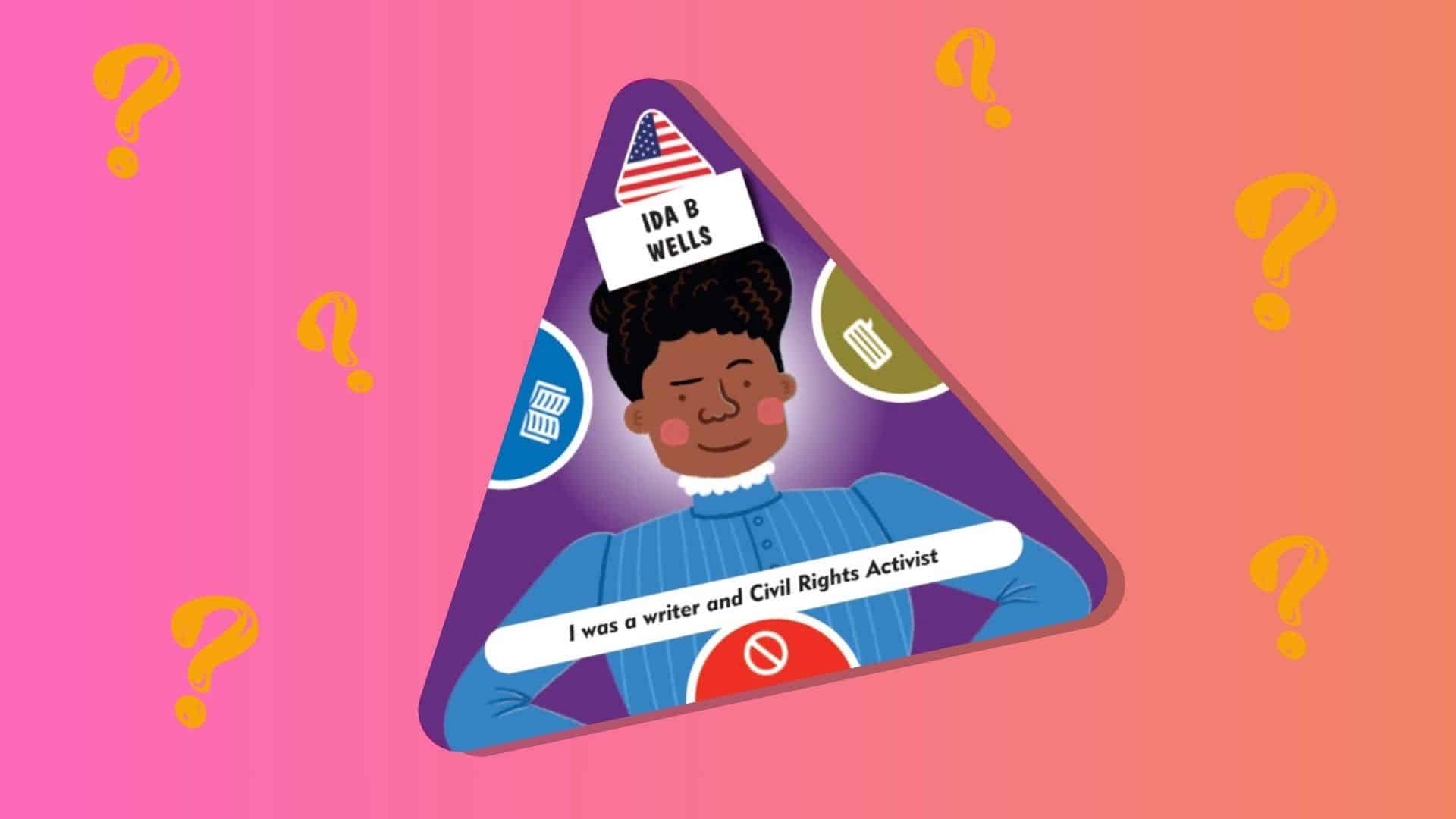
Have you heard of Ida B. Wells? Born into slavery, Ida B. Wells would become a hugely impactful journalist, writer and anti-lynching and women’s rights activist. Read on for more about this incredible History Hero! Don’t forget to explore more with our fantastic and mighty game in a mini box, History Heroes: A LITTLE SLICE OF HISTORY.
Ida B. Wells Early Life
Ida B. Wells-Barnett was born into slavery on the 16th of July 1862 in Holly Springs, Mississippi in the United States of America. When Ida B. Wells was born, the U.S. Civil War (1861-1865) was in full swing. This era was one marked by conflict between the North (the Union) and the South (the Confederacy) about slavery and the rights of African American people. In 1865, at the end of the Civil War, Ida B. Wells and her parents were emancipated from slavery through Abraham Lincoln’s Emancipation Proclamation.
Ida B. Wells grew up during the Reconstruction Period where the United States focused on rebuilding the nation and legally defining the rights of formerly enslaved African American people. Amongst this time, Ida B. Wells’ parents both died of yellow fever, leaving her to look after her 6 brothers and sisters at age 16.
A teacher, Ida B. Wells then moved to Memphis where she would begin her journalism career.
Ida B. Wells Journalism
In Memphis, Ida B. Wells launched her journalism career as the editor of The Evening Star and would go on to write for a number of newspapers. She wrote about racial inequality and every day struggles African American people faced. Ida B. Wells was controversial in her writing, exposing the reality of the lynching landscape in Memphis after her close friend and Grocery store owner was lynched for competing with a local white grocer. Ida B. Wells’ writing shone a light on the inconsistencies in the official records which left many people angry, sparking a white mob to set fire to the newspaper’s office.
This did not stop Ida B. Wells, who was forced to leave Memphis after this violent incident. It merely ignited her anti-lynching activism, where she began going undercover to investigate and publish her findings. Ida B. Wells moved to Chicago where she would have a significant impact on the political landscape of the city.
She travelled abroad and lectured across the United Kingdom, which led to the founding of the London Anti-Lynching Committee. Ida B. Wells also collected contributions to an official record that documented the oppression faced by African Americans in the post-Civil-War South.
“The way to right wrongs is to turn the light of truth upon them” – Ida B. Wells
Ida B. Wells Activism
As an African American woman, Ida B. Wells was a part of the Women’s Suffrage Movement alongside white activists like Susan B. Anthony. However, she was vocal about the lack of support from white women in the Women’s Suffrage Movement in the United States, openly criticizing Susan B. Anthony for her refusal to prioritise the struggles and concerns of African American Women. Ida B. Wells went on to found, and help found, suffrage groups like the League of Colored Women, and the National Association of Colored Women.
Perhaps the most significant published work by Ida B. Wells was the 1895 book, A Red Record: Tabulated Statistics and Alleged Causes of Lynchings in the United States, widely known today as The Red Record. In this book, Ida B. Wells recorded lynchings across the United States, demanding that readers contribute to the anti-lynching cause.
Make connections between Ida B. Wells and other History Heroes with our game, History Heroes: A LITTLE SLICE OF HISTORY. Which History Heroes can you connect Ida B. Wells to? Mary Seacole or Florence Nightingale, Nelson Mandela, Maya Angelou?
Ida B. Wells Later Life
Ida B. Wells never rested in her fight for justice and equality. In the early twentieth century, she fought for African American women’s voting rights. When black suffragists were told to walk behind the white women at the 1913 Women’s Procession March, Ida B. Wells simply refused, joining the white suffragists and integrating the procession.
In 1931, Ida B. Wells died from kidney disease. She is remembered as a History Hero who contributed to the foundations of the civil rights movement long before its time.
Ida B. Wells Discussion Questions
Now you know about Ida B. Wells, we’re suggesting some discussion questions for you to explore at home, at school or with friends! Let us know what you discuss, we always love hearing from history fans.
- Why did Ida B. Wells speak out even when it was dangerous to do so?
- Can you think of someone today who speaks out against inequality? What makes them like Ida B. Wells?
- If you met Ida B. Wells and could ask her one question, what would you ask her? What do you imagine her answer might be?
Learn more and have fun with History Heroes: A LITTLE SLICE OF HISTORY.